.webp)
A specialized truck can be perfectly engineered for its job and still lose days waiting for the right suspension support. For Western Canadian fleets, the problem is often distance, not a lack of maintenance effort. A local authorized Simard suspension dealer gives you closer access to application-specific parts, technical knowledge, and repairs that help return vocational trucks to service sooner.
Why Does Local Simard Suspension Support Matter in Western Canada?
Western Canadian fleets routinely operate hundreds of kilometres from their home terminals. A crane truck near Grande Prairie, a hydrovac outside Bonnyville, or a refuse truck in Edmonton cannot always make a practical trip to an eastern service facility when a specialized component needs attention.
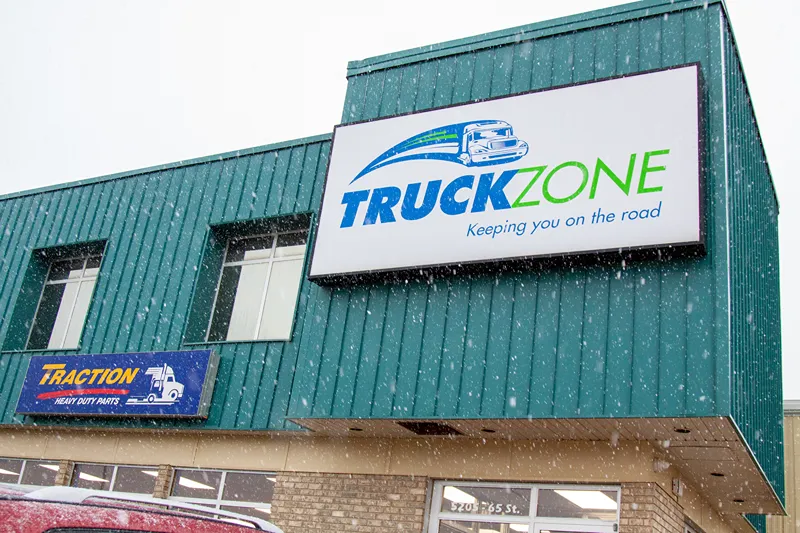
At Truck Zone, we operate as a Simard Suspensions authorized service provider in Western Canada, supporting Simard suspension products in Alberta and British Columbia. Our locations include Edmonton, Lloydminster, Bonnyville and Nanaimo, giving regional fleets several points of access to authorized support.
That regional coverage can help your fleet gain:
- Faster access to Simard suspension parts
- Technicians familiar with specialized suspension and steering systems
- Shorter travel or transport distances for disabled trucks
- Support closer to major Western Canadian operating corridors
- Service informed by local vocational duty cycles
- Less reliance on parts and technical assistance shipped from Eastern Canada
Where Can Western Fleets Find Authorized Simard Support?
Truck Zone’s authorized locations line up with several of Alberta’s busiest industrial regions and trucking routes.
How Does the Edmonton Location Support Regional Fleets?
Edmonton is a hub for municipal, construction, utility, refuse and regional freight operations. Its connection to Highway 16, Highway 2, Highway 28 and Highway 63 also makes the city a practical service point for trucks travelling across central and northern Alberta.
For fleets operating snowplows, sewer trucks, fire apparatus, concrete mixers or heavy service bodies, local access matters. These vehicles often carry concentrated body weight or front-mounted equipment that places unusual demands on steering, suspension and axle components.
Why Is Lloydminster Important for Border-Crossing Operations?
Lloydminster sits directly on the Alberta–Saskatchewan border and supports heavy-oil, construction and regional freight activity. Trucks in this market may spend their days moving between industrial sites, lease roads and Highway 16 rather than running predictable terminal-to-terminal routes.
A nearby heavy truck suspension repair provider can reduce the need to move a specialized truck deep into Alberta for Simard-specific service. That advantage becomes especially valuable when a vacuum truck, tank truck or oilfield service unit cannot easily be replaced.
What Fleets Benefit From the Bonnyville Location?
Bonnyville supports northeastern Alberta’s energy, construction and resource-service industries. Fleets travelling Highway 28 toward Cold Lake and surrounding industrial areas frequently work on gravel roads, rough access routes and remote sites.
Those conditions can accelerate wear in suspension bushings, steering joints, springs, air lines and alignment-related components. Local technicians who understand both the suspension system and the vehicle’s application can evaluate the cause of the wear instead of simply replacing the most obvious failed part.
Why Does Nanaimo Need Specialized Suspension Expertise?
Nanaimo is a major service centre for Vancouver Island. Being on an island it is uniquely isolated and carries forestry, energy and construction traffic through demanding resource areas.
Logging trucks, heavy haulers and oilfield vehicles regularly encounter uneven loads and steep mountainroads when crossing over to the mainland. Under those conditions, proper axle alignment, suspension articulation and load distribution directly affect steering response, component life and tire wear.
Which Western Canadian Industries Depend on Specialized Suspensions?
Simard suspension and steering systems are commonly associated with heavy vocational vehicles whose configurations go beyond ordinary highway tractors. The body, equipment, payload, and operating environment all influence how the chassis must carry and distribute weight.
How Do Oil and Gas Fleets Use Specialized Axle Systems?
Oil and gas fleets around Lloydminster, Bonnyville, Cold Lake, Grande Prairie and Fort McMurray use hydrovacs, vacuum trucks, crane trucks, tank trucks and heavy recovery units. These vehicles may carry large tanks, lifting equipment or service bodies that create heavy and uneven axle loads.
Properly engineered auxiliary axle systems help distribute that weight across the vehicle. When those systems need maintenance, technicians must consider air controls, steering geometry, bushings, springs and the complete axle arrangement, not just one worn component.
Why Are Forestry Trucks Hard on Suspension Components?
Forestry trucks in northwestern Alberta and northern or interior British Columbia travel loaded logging roads with ruts, steep approaches and uneven surfaces. Constant articulation can strain springs, bushings, steering components and axle connections.
A small alignment or ride-height issue can quickly become irregular tire wear or unstable handling. Regular inspections help your fleet catch looseness, movement and component deterioration before the truck returns to a remote haul route.
What Makes Municipal and Refuse Trucks Different?
Refuse trucks, snowplows, sewer trucks and utility vehicles operate differently from long-haul equipment. They stop frequently, turn sharply, work at low speeds and may carry heavy front-mounted or side-loading equipment.
These duty cycles place repeated loads on heavy-duty steering systems and suspension components. Edmonton-area municipal fleets also face potholes, frost heaves, road salt and intense winter workloads, making preventive inspections especially important.
Why Do Construction Trucks Need Application-Specific Service?
Dump trucks, mixers, cranes and equipment haulers work on jobsites where surfaces shift daily. They may enter a site on compact gravel in the morning and leave through deep ruts after heavy traffic or rain.
Your service provider should evaluate how the vehicle is loaded and used. Repeatedly replacing a bushing without checking axle position, ride height or weight distribution may leave the actual cause untouched.
How Do Western Operating Conditions Affect Suspension Wear?
A suspension system supports vehicle and cargo weight, distributes loads and helps absorb road impacts. Shock absorbers control rebound, while springs or air suspension carry the chassis and respond to changing road conditions.
Western fleets should watch for wear related to:
- Oilfield lease roads and forestry roads
- Gravel industrial access routes
- Potholes and frost-damaged pavement
- Heavy front-mounted attachments
- Uneven vocational payloads
- Severe cold and frozen air-system components
- Long grades and sharp curves in British Columbia
- Extended distances between repair facilities
An air suspension system also depends on clean, reliable compressed air. Moisture, damaged lines, leaking fittings or frozen components can affect ride height and load support, especially during severe cold.
What Are the Signs That a Simard Suspension Needs Service?
Suspension problems rarely improve on their own. Catching the warning signs early can protect tires, steering parts, and connected chassis components.
Schedule an inspection when you notice:
- Uneven or rapidly increasing tire wear
- A truck leaning or sitting at an unusual height
- Loose, delayed or inconsistent steering response
- Excessive bouncing after potholes or frost heaves
- Air leaks or slow suspension response
- Unusual clunks, squeaks or movement
- A steerable axle that does not track correctly
- Repeated failure of bushings or related hardware
Do not assume that every tire-wear problem begins at the tire. Worn suspension parts, incorrect commercial truck alignment or uneven axle loading may create the pattern.
Does Dealer Authorization Replace Provincial Inspections?
No. Simard authorization does not replace provincial inspections, engineering requirements, permits or weight-and-dimension rules.
National Safety Code Standard 11 provides recommended commercial vehicle maintenance standards and periodic inspection criteria. Provinces administer their own inspection and enforcement programs, including Alberta’s Commercial Vehicle Inspection Program and British Columbia’s commercial vehicle inspection requirements.
A specialized axle or suspension configuration may also need to comply with provincial weight limits, dimensional requirements and permit conditions. Interprovincial fleets should confirm the requirements that apply in every jurisdiction where the truck operates.
Why Do Fleets Choose Truck Zone for Simard Suspension Service?
The strongest reason is practical: specialized trucks need specialized support close to where they work.
Through our partnership with Simard, Truck Zone offers Western Canadian customers more local maintenance and repair support, increased regional inventory and access to technicians developing Simard-specific expertise. The arrangement is intended to reduce lead times and strengthen aftermarket support in Alberta and British Columbia, without having to call Quebec and potentially struggle with language and time zone barriers.
For a fleet moving between Edmonton, Lloydminster, Bonnyville and Nanaimo that coverage can mean fewer kilometres spent chasing parts and technical help. When every disabled vocational truck disrupts a crew, route or project, that difference adds up quickly.
Keep Your Specialized Trucks Ready for Western Work
Rough roads, remote worksites and uneven vocational loads place constant pressure on suspension and steering components. Regular inspections, proper alignment and application-specific repairs help protect your tires, handling and uptime.
Contact our team via our Contact Page to find the location closest to you, schedule your service with a local authorized Simard suspension dealer, and get support closer to your Western Canadian operating territory.
Frequently Asked Questions
What is an authorized Simard suspension dealer?
An authorized Simard suspension dealer provides service, parts support, and technical assistance for Simard suspension and steering systems. For Western Canadian fleets, that means access to technicians and inventory closer to where specialized vocational trucks operate.
Where can Western Canadian fleets find authorized Simard suspension support?
Truck Zone provides authorized Simard support through locations in Edmonton, Lloydminster, Bonnyville and Nanaimo. These locations serve fleets operating across Alberta and into British Columbia.
Which trucks benefit most from specialized Simard suspension service?
Heavy vocational vehicles benefit most, including hydrovacs, vacuum trucks, crane trucks, refuse trucks, snowplows, logging trucks, concrete mixers, tank trucks and heavy recovery units. These vehicles often carry uneven loads or specialized equipment that places extra demand on suspension and steering components.
What are the signs that a Simard suspension needs service?
Common warning signs include uneven tire wear, unusual ride height, loose steering, excessive bouncing, air leaks, slow suspension response, clunks, squeaks and a steerable axle that does not track correctly. Repeated bushing or hardware failures may also point to a larger alignment or load-distribution problem.
Why does local authorized support matter for Western fleets?
Local support can reduce travel distances, parts delays and downtime for specialized trucks. It also gives fleets access to technicians familiar with Western operating conditions such as rough roads, severe cold, remote worksites and uneven vocational loads.
Does Simard dealer authorization replace provincial inspections?
No. Dealer authorization does not replace provincial inspections, permits, engineering requirements or weight-and-dimension rules. Fleets must still meet the commercial vehicle requirements that apply in every province where the truck operates.
%20(1).webp)

.webp)