Your heavy-duty truck still pulls to one side, even after a wheel alignment. Another alignment might seem like the obvious answer, but what if the problem isn't in the suspension? Structural chassis distortion can affect axle positioning and vehicle tracking in ways ordinary adjustments cannot correct. Professional heavy-duty truck frame straightening services begin by measuring the chassis to determine whether structural repair is necessary.
What's the Difference Between Wheel Alignment and Frame Straightening?
Wheel alignment and frame straightening address different mechanical conditions.
Wheel alignment focuses on the positioning of wheels and axles relative to the vehicle's intended geometry.
Frame straightening addresses structural distortion in the chassis itself.
How wheel alignment corrects vehicle tracking
A heavy-duty truck's alignment depends on axle position, suspension condition, steering geometry, and manufacturer specifications.
When these components are incorrectly positioned, the vehicle may pull, track improperly, or experience unusual tyre wear.
Technicians evaluate relevant measurements and make permitted adjustments to restore alignment.
However, not every tracking complaint requires a structural repair.
A truck with worn suspension components, incorrect axle positioning, or steering problems may need conventional alignment and mechanical service rather than frame straightening.
Why alignment cannot always correct frame distortion
A truck's frame provides the structural foundation for its cab, suspension, axles, and mounted equipment.
If that foundation becomes distorted, normal axle adjustments may not restore the intended relationship between structural mounting points.
For example, a collision may shift part of a chassis enough to affect axle geometry.
A technician could adjust certain alignment settings without correcting the underlying structural problem.
That's where heavy-duty chassis alignment and frame measurement become important parts of the diagnostic process.
The objective is to determine whether the problem comes from adjustable components or damaged structural geometry.
What Are the Warning Signs of a Bent Heavy-Duty Truck Frame?
A truck with structural distortion may display handling problems, visible damage, or unusual alignment measurements.
However, these symptoms don't automatically prove that the frame is bent.
Persistent tracking problems after alignment
A truck that continues pulling or tracking incorrectly after a properly performed alignment may have an unresolved mechanical or structural problem.
Potential causes include suspension damage, axle positioning faults, steering concerns, or frame distortion.
Technicians should investigate these possibilities rather than assuming another alignment will solve the issue.
Visible frame rail damage
Heavy-duty truck frames commonly use longitudinal rails connected by crossmembers.
Significant impacts or abnormal loading conditions can damage these structural components.
Visible bends, buckling, cracks, or distorted mounting areas may indicate the need for a detailed truck frame damage assessment.
Even when the truck appears driveable, structural damage can affect safety and component alignment.
Unusual axle positioning
A commercial truck's axles must maintain the geometry specified for its design.
When mounting points or structural sections move out of position, axle alignment may be affected.
This becomes particularly important for multi-axle configurations such as twin-steer and tridrive vocational trucks.
Their additional axles and suspension components require accurate measurements to distinguish local alignment problems from chassis distortion.
Uneven structural measurements
Some frame defects aren't obvious during a visual inspection.
Technicians may discover that diagonal measurements, rail positions, or structural reference points differ from manufacturer specifications.
Those findings can identify distortion that ordinary wheel alignment equipment may not fully evaluate.
Professional measurement is therefore more reliable than judging frame condition by appearance alone.
What Causes Heavy-Duty Truck Frames to Become Distorted?
Heavy-duty chassis are designed to support substantial loads, but they have specific structural and operating limits.
Damage can develop when impacts or loading conditions exceed those limits.
Collision and impact damage
Collisions are an important cause of structural distortion.
A significant impact can affect frame rails, crossmembers, axle mounting points, and attached components.
The severity and direction of the impact influence which parts of the chassis require inspection.
For Edmonton trucks involved in collisions, a visual examination alone may not establish whether the structural geometry remains within specification.
Excessive or improperly distributed loads
Heavy-duty trucks are engineered for specific weight ratings and load distributions.
Operating beyond those limits or applying loads incorrectly can place abnormal stress on structural components.
Construction and equipment-hauling trucks may carry demanding loads, making correct loading practices particularly important.
However, normal hauling within the vehicle's approved specifications should not automatically bend a sound frame.
Severe operational impacts
Large impacts involving obstacles, damaged road surfaces, or work-site conditions may affect suspension and structural components.
Vocational trucks operating around Edmonton industrial sites can encounter demanding environments, but frame damage depends on the actual impact and vehicle condition.
A professional inspection can determine whether the event damaged suspension components, chassis geometry, or both.
How Do Technicians Measure Heavy-Duty Truck Frame Damage?
Accurate structural measurement is essential before recommending truck frame straightening Edmonton services.
Technicians need to establish whether the chassis is distorted and identify the location and extent of the damage.
Frame rail and datum-point measurements
Manufacturers provide structural dimensions and reference points for assessing chassis geometry.
Technicians compare actual measurements against those specifications to identify deviations.
Measurements may involve rail spacing, rail height, diagonal distances, and the relationship between structural mounting points.
A frame that appears straight from one angle may still contain measurable distortion.
Axle and suspension positioning
Axle geometry can provide additional information about the vehicle's structural condition.
Technicians examine whether axles, suspension mounting points, and related components align with the intended chassis dimensions.
This helps determine whether an observed tracking problem comes from suspension adjustment, damaged hardware, or frame distortion.
A complete heavy-duty truck frame inspection may therefore include both structural measurement and alignment-related checks.
Evaluating the full damage area
Structural assessment should extend beyond the most visible damaged section.
A significant impact can affect crossmembers, brackets, mounting areas, and nearby components.
Technicians may also inspect for cracks, corrosion, previous repairs, or other conditions that influence repairability.
Accurate diagnosis helps prevent an incomplete repair that restores one measurement while leaving another problem unresolved.
When Is Professional Frame Straightening the Appropriate Repair?
Frame straightening may be appropriate when structural distortion falls within the vehicle manufacturer's permitted repair limits.
The decision depends on the location and severity of damage, frame material, chassis configuration, and condition of related components.
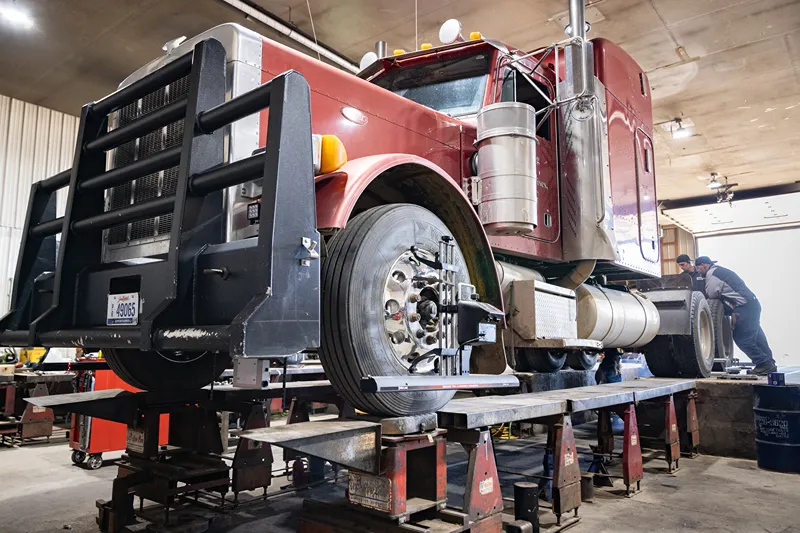
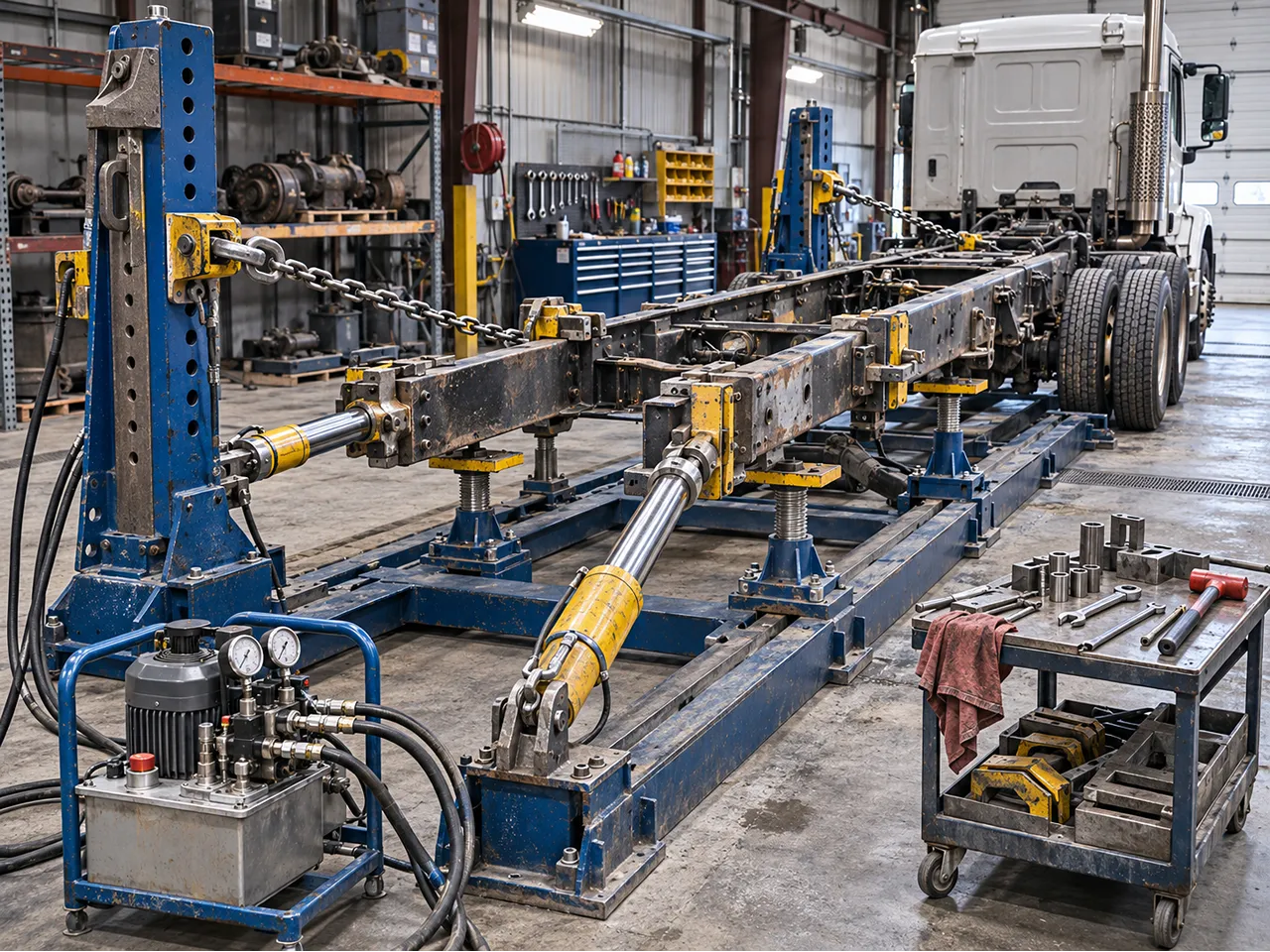
Qualified technicians may use controlled hydraulic equipment and approved measurement procedures to restore repairable structural geometry.
However, commercial truck frame repair doesn't always mean straightening.
Some damage requires component replacement, while certain structural conditions may make repair unsafe or impractical.
Cracked rails, extensive corrosion, and severely compromised sections require careful evaluation.
Manufacturer instructions may also restrict heating, welding, drilling, or straightening particular frame materials and components.
Those restrictions matter because an incorrect repair can compromise structural integrity even if the frame appears visually straight.
For Edmonton fleets, determining repairability before beginning work helps establish a realistic repair plan.
Why Does Frame Condition Matter for Edmonton Commercial Vehicle Safety?
A heavy-duty truck's chassis affects suspension mounting, axle positioning, and the structural support of major vehicle components.
Uncorrected damage can interfere with proper vehicle operation and complicate alignment repairs.
In November, Edmonton operators also face colder temperatures and potentially slippery road conditions.
Those conditions don't cause frame distortion by themselves, but predictable handling becomes particularly important when road traction decreases.
Alberta's Commercial Vehicle Inspection Program (CVIP) establishes inspection requirements for applicable commercial vehicles.
Structural condition and other safety-related defects form part of the broader inspection and maintenance considerations.
However, not every alignment problem means a truck has structural damage or will fail a CVIP inspection.
If significant chassis damage is suspected, professional assessment should occur before the truck returns to normal service.
Where Can Edmonton Trucks Get Professional Frame Measurement?
A truck that continues tracking incorrectly after alignment needs a diagnosis that goes beyond repeated adjustments.
If your truck has persistent tracking problems, visible rail distortion, or suspected collision damage, arrange a professional frame assessment.
Contact our team at Truck Zone to discuss structural measurements and determine whether straightening, component replacement, or conventional alignment is the appropriate solution. Correct diagnosis helps protect your truck's structural integrity, improve handling, and avoid unnecessary repeat repairs.
For additional background, explore the basics of truck and trailer frame straightening.
Frequently Asked Questions About Heavy-Duty Frame Straightening
Can wheel alignment fix a bent truck frame?
No. Wheel alignment adjusts permitted wheel and axle geometry, while frame straightening addresses structural chassis distortion. If the frame is bent, technicians must assess the structural damage before determining the appropriate repair.
How can I tell whether my semi-truck frame is bent?
Possible signs include persistent tracking problems, visible rail damage, unusual axle positioning, and abnormal structural measurements. These conditions require professional inspection because suspension and steering faults can produce similar symptoms.
Can every bent heavy-duty truck frame be straightened?
No. Repairability depends on frame material, damage location, severity, cracking, corrosion, and manufacturer repair requirements. Some damage requires component replacement or may not be safely repairable.
How do technicians measure truck frame distortion?
Technicians use manufacturer reference dimensions, structural datum points, diagonal measurements, and axle-position checks to compare the chassis against its intended geometry.
Does a truck with poor alignment automatically fail a CVIP inspection?
Not necessarily. Alberta's CVIP inspections assess applicable vehicle safety requirements. Whether a defect results in rejection depends on the specific condition and inspection criteria, not simply the presence of an alignment complaint.